Back to Works
Case Study
2026
Background
Danantara Indonesia is a national investment management institution established to optimize the management of Indonesia’s state assets through strategic investments. The organization functions as a sovereign investment entity that manages and allocates capital into strategic sectors to support long-term national economic growth.
Current Condition
I’ve seen a lot of criticism from netizens and media outlets about the Danantara Indonesia website. Many users from the digital public pointed out several issues, such as:
Unclear information structure that makes it difficult to understand.
Unprofessional website presentation that does not reflect the credibility.
60% of sources reported that Danantara is not sufficiently transparent, including in publishing information that should be available on the website.
40% of sources attributed the weak website to a lack of a strong governance structure.
Website Preview
Based on that condition, I'm reviewing the current Danantara Indonesia website, several issues mentioned by the public appear to be valid. Some noticeable issues include:
Weak visual hierarchy
Unclear information structure
Low perceived professionalism
Limited transparency of institutional information
Clashing colors and layout that make the content harder to read
Link preview video: https://shorturl.at/UIqp4
Goal
So, I would like to redesign this to create a more professional, transparent, and accessible website that improves how people understand and trust the platform.
Success Metrics Target
1K+ impressions & 20+ likes/reactions di LinkedIn post.
New design preference feedback.
User Target Criteria
Since Danantara is a national investment institution, the website mainly serves users who need clear and credible institutional information, such as:
Investors & financial observers
Media & journalists
Government & institutional people
General public
Role
UI/UX Designer & UX Researcher
Project Timeline
2 days in research & 1 day in design
Benchmarking
To determine the right design, I benchmarked several credible investment institution/public agency websites and got these insights:
Competitor | Result |
|---|---|
Clear menu structure, easy to find public data | |
Transparent reporting and performance data | |
Professional and formal content layout |
Research Insights
Transparency is the main issue, as many sources highlight the lack of accessible information.
Transparency requires clear navigation, well-structured content, and accessible information.
Weak governance and content management can lead to inconsistent updates and unclear information delivery.
Institutional credibility is strengthened through open reporting and accessible performance data, as shown by Norges Bank Investment Management and Temasek Holdings.
Clear hierarchy and professional content structure improve usability and trust, similar to the approach used by Indonesia Investment Authority.
Opportunity to Design Solution
Opportunity | Design Direction/Solution |
|---|---|
Increase transparency and credibility | Transparency hub for reports and governance |
Improve visual hierarchy & navigation | Clear navigation structure and content hierarchy |
Improve communication of activities | News & updates section |
Show strategy and performance clearly | Strategy & program section |
Highlight collaboration ecosystem | Danantara partners showcase |
Design Strategy
Design Strategy | Reason |
|---|---|
Minimalism Style | Reduces visual noise so users can focus on information. |
60% – 30% – 10% Color Rule | Creates balanced visual and helps guide user attention. |
Visual Hierarchy Balance | Helps users scan key sections like reports, strategy easily (Hick’s Law). |
Consistent Layout System | Usability and familiarity so users can navigate information more efficiently (Jakob’s Law). |
WCAG Accessibility Audit | Ensures the website is accessible and readable. |
Design Execution
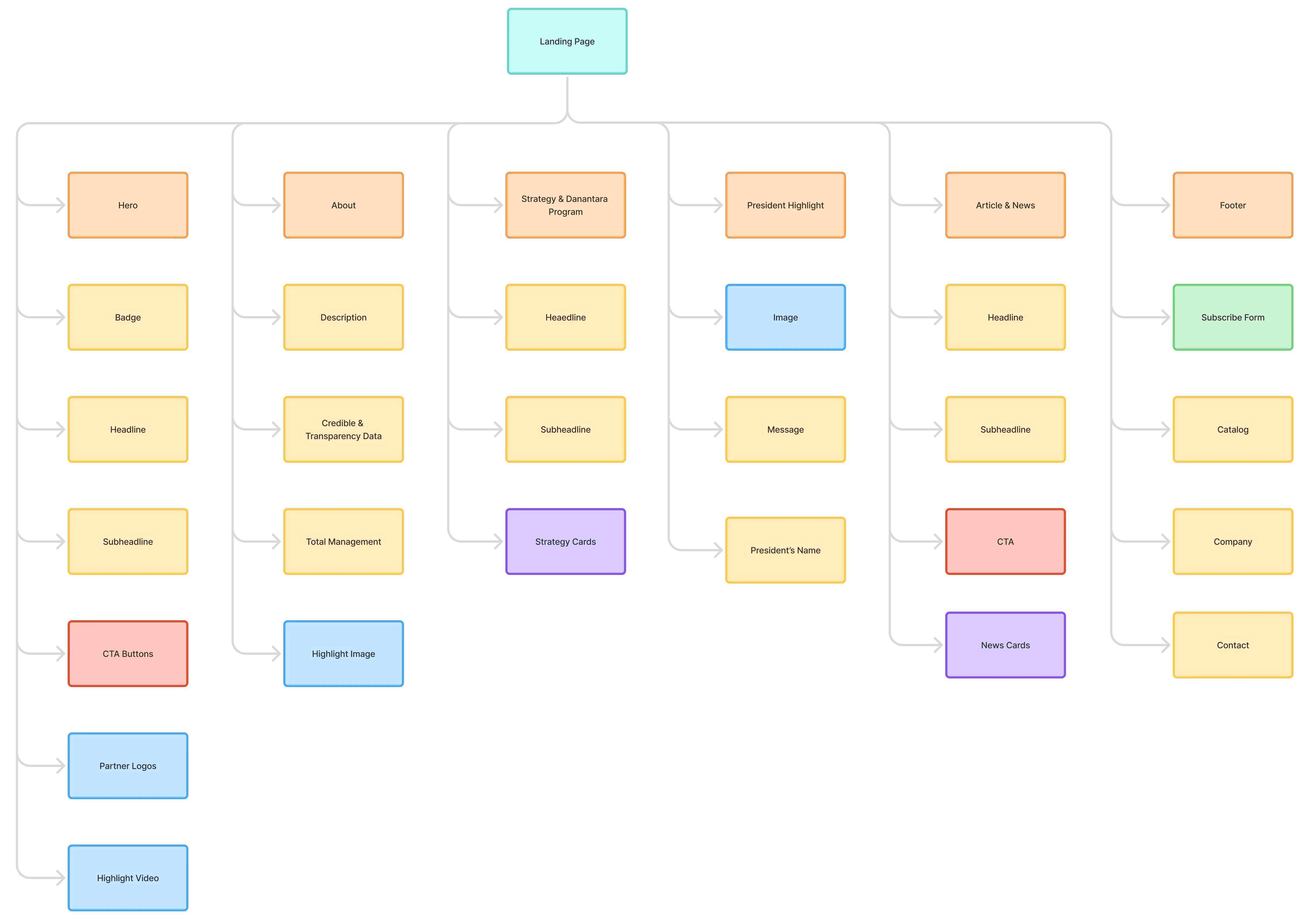
Information Architecture
Design System
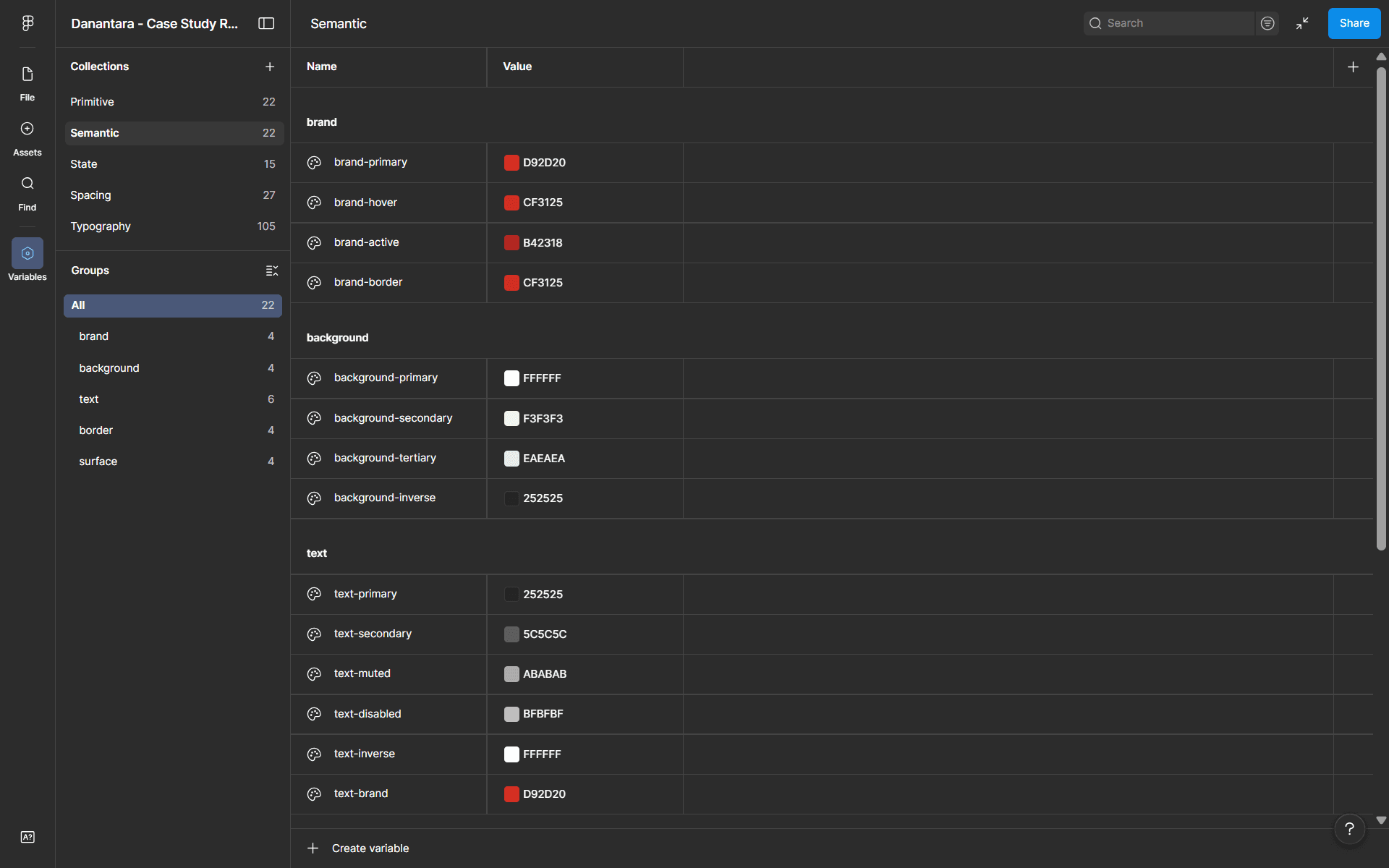
Color Token
I structured the color system into primitive, semantic, and state tokens to maintain consistency across the interface.
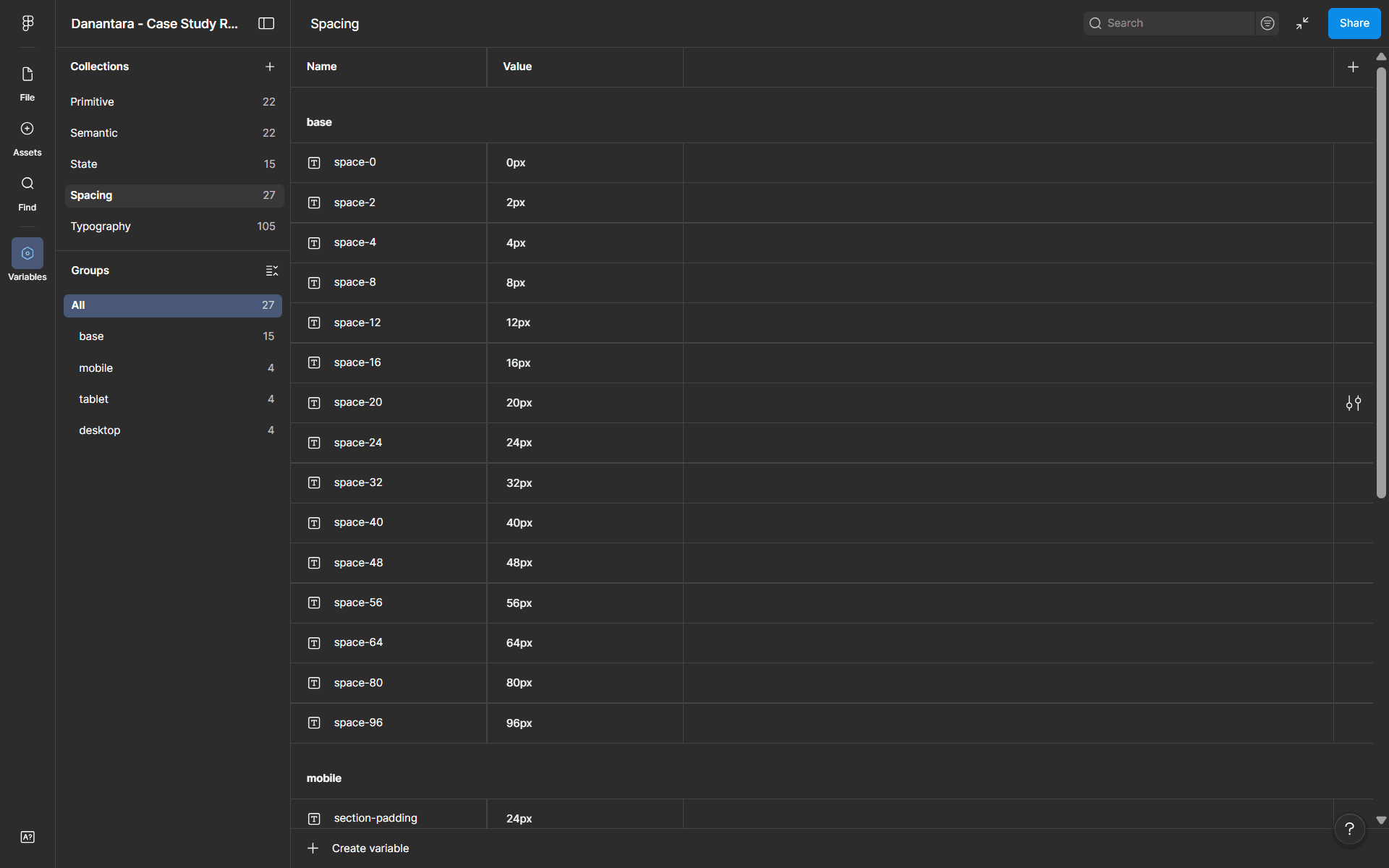
Spacing Token
I built the spacing system using a 4px scale to create consistent rhythm and alignment across the layout.
Typography Token
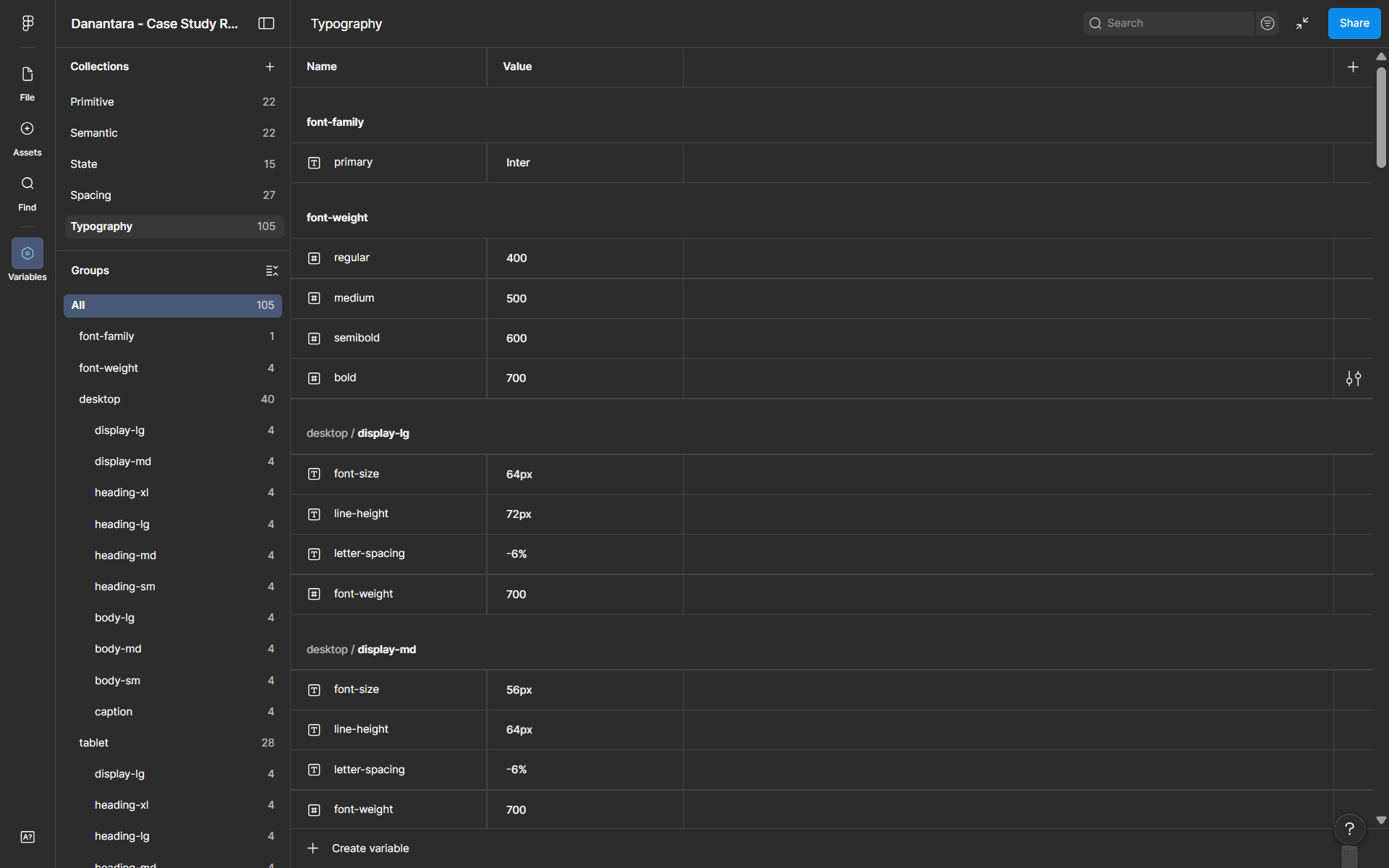
I chose Inter as the primary typeface for its readability and suitability for digital interfaces.
Component System
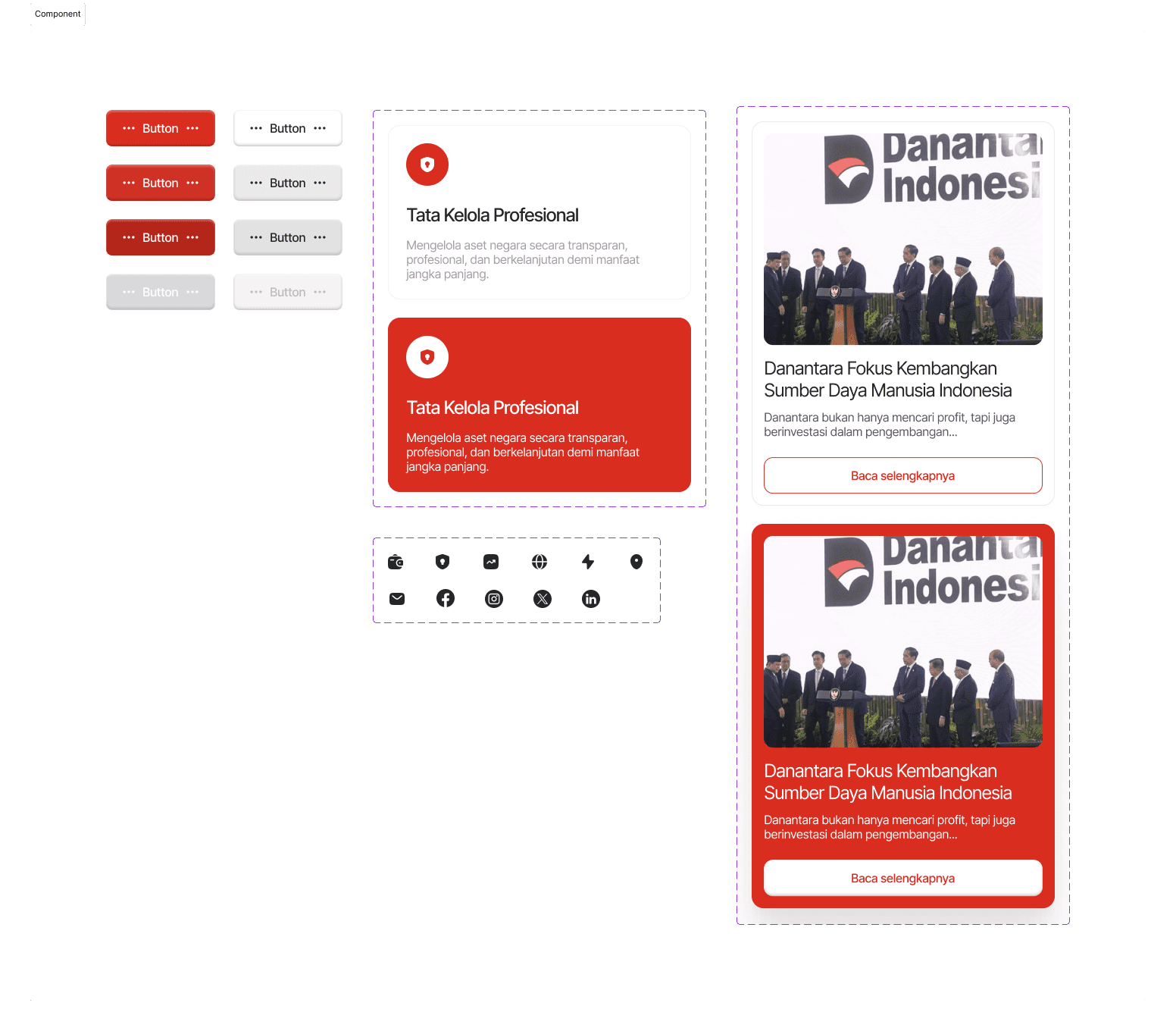
I designed reusable components such as buttons and cards to maintain consistency across the interface, while supporting different types of content like strategy programs and news.
Design UI
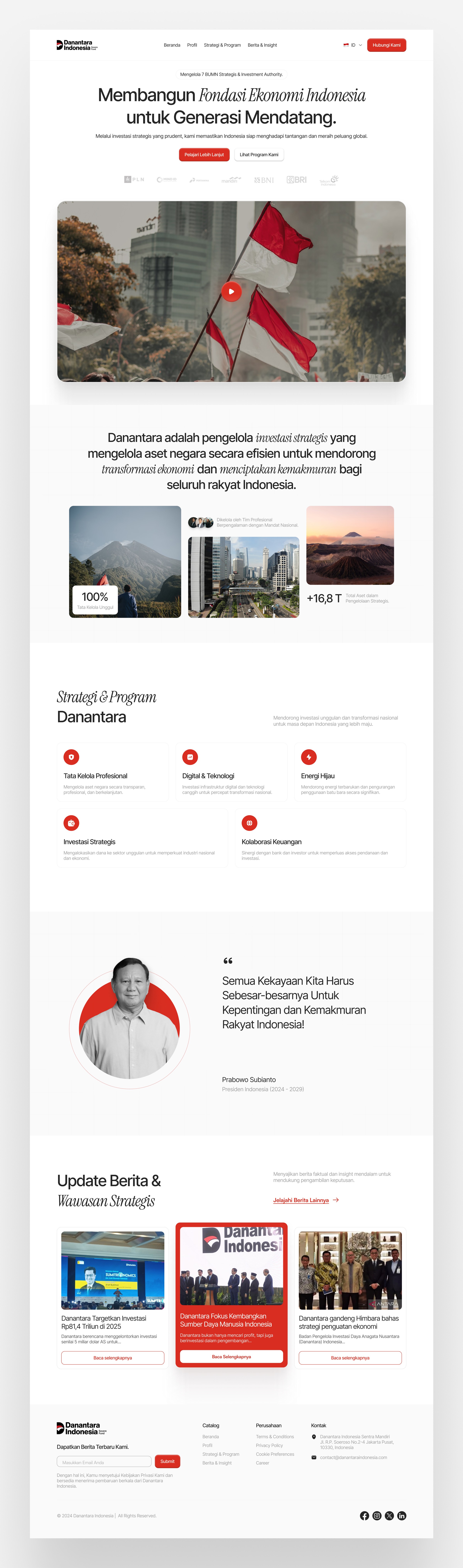
The Result of Design
More Details: https://shorturl.at/JAymR
Concept Validation via LinkedIn
Validation was conducted through a LinkedIn post to gather early feedback and measure audience response to the redesigned concept.
Results
10K+ impressions (~1000% higher than typical post metrics)
250+ reactions (~400% higher engagement)
30+ comments supporting the redesigned concept
See the result: https://shorturl.at/AV3bA
Closing Reflection
This project taught me that digital design for public institutions prioritizes more than just aesthetics, but also clarity, accountability, and trust. As a product-oriented designer, my role isn’t just to create better visuals, but also to help institutions communicate with the public more transparently and meaningfully. Thanks!